Solar System Trivia: Intriguing Facts About Our Solar System
- contentmaniacsinte
- May 12
- 4 min read
Our solar system is a vast and fascinating place, full of wonders that continue to captivate curious minds. From the blazing sun at its centre to the icy comets on its outskirts, there is so much to learn and explore. I’ve always been fascinated by the mysteries of space, and today I want to share some of the most intriguing facts about our solar system that might surprise you. Whether you’re a seasoned fact enthusiast or just starting your journey into astronomy, these insights will surely enrich your understanding.
Exploring Solar System Trivia: A Journey Through Space
When we think about the solar system, we often picture the eight planets orbiting the sun. But there’s so much more than just planets. Our solar system includes moons, asteroids, comets, and the vast stretches of space filled with dust and gas. Each component has its own story and unique characteristics.
For example, did you know that Jupiter’s Great Red Spot is a giant storm that has been raging for at least 400 years? Or that Venus spins in the opposite direction to most planets, making its day longer than its year? These are just a couple of examples of the many fascinating details that make our solar system so intriguing.
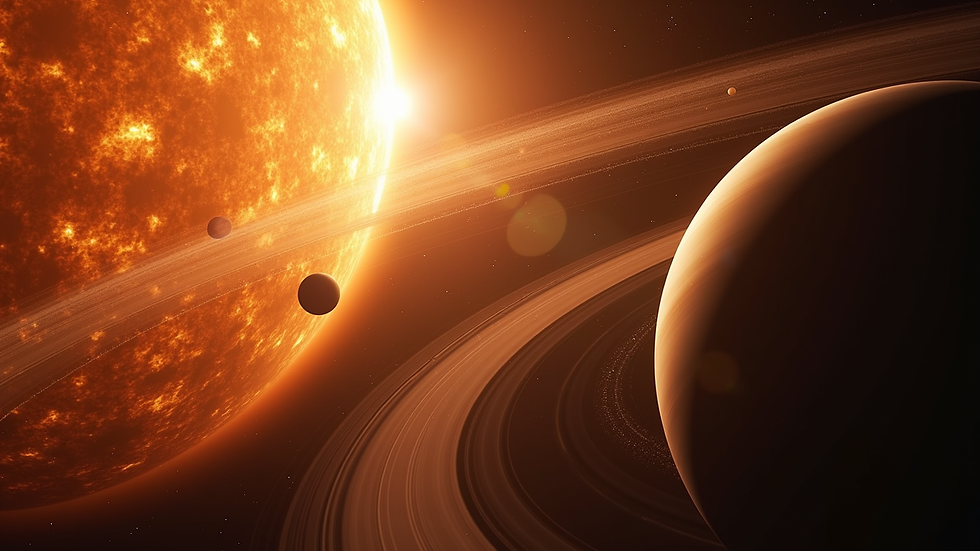
Understanding these facts helps us appreciate the complexity and beauty of the cosmos. It also reminds us how much there is still to discover. The more we learn, the more questions arise, driving scientists and enthusiasts alike to keep exploring.
What Makes Solar System Trivia So Captivating?
Solar system trivia is not just about memorising facts; it’s about connecting with the universe on a deeper level. Each fact reveals something about the forces and processes that shape our cosmic neighbourhood. For instance, the asteroid belt between Mars and Jupiter is a remnant of the early solar system, a clue to how planets formed billions of years ago.
Here are some reasons why solar system trivia is so captivating:
It sparks curiosity: Learning about distant worlds and phenomena encourages us to ask questions and seek answers.
It connects us to history: Many features in the solar system have been observed for centuries, linking us to past astronomers.
It inspires exploration: Facts about space fuel missions and technological advances to explore further.
It broadens perspective: Understanding our place in the solar system helps us see Earth as part of a larger cosmic story.
By diving into these details, we gain a richer appreciation of the universe and our role within it.
What are 20 facts about our solar system?
To satisfy your curiosity, here are 20 fascinating facts about our solar system that highlight its diversity and wonder:
The sun contains 99.8% of the solar system’s total mass.
Mercury has no atmosphere, causing extreme temperature fluctuations.
Venus is the hottest planet, with surface temperatures reaching 465°C.
Earth is the only planet known to support life.
Mars has the tallest volcano in the solar system, Olympus Mons.
Jupiter’s magnetic field is 14 times stronger than Earth’s.
Saturn’s rings are made mostly of ice particles.
Uranus rotates on its side, with an axial tilt of 98 degrees.
Neptune has the fastest winds, reaching speeds of 2,100 km/h.
10. Pluto, once considered the ninth planet, is now classified as a dwarf planet.
11. The asteroid belt contains millions of rocky bodies between Mars and Jupiter.
12. Comets are made of ice, dust, and rocky material, often called “dirty snowballs.”
13. The Kuiper Belt is a region beyond Neptune filled with small icy bodies.
14. The Oort Cloud is a theoretical shell of icy objects surrounding the solar system.
15. Io, one of Jupiter’s moons, is the most volcanically active body in the solar system.
16. Europa, another moon of Jupiter, may have a subsurface ocean capable of supporting life.
17. Titan, Saturn’s largest moon, has a thick atmosphere and liquid methane lakes.
18. The solar wind is a stream of charged particles released from the sun’s atmosphere.
19. The heliosphere is a bubble-like region of space dominated by the solar wind.
20. The Voyager 1 spacecraft is the farthest human-made object from Earth, now in interstellar space.
These facts only scratch the surface of what makes our solar system so endlessly fascinating.

How Understanding Our Solar System Benefits Us
Learning about the solar system is not just an academic exercise. It has practical benefits that impact technology, science, and even our daily lives. For example, studying the sun’s activity helps us predict space weather, which can affect satellite communications and power grids on Earth.
Space exploration has also led to numerous technological advances, from improved imaging techniques to new materials developed for spacecraft. These innovations often find applications in medicine, engineering, and environmental monitoring.
Moreover, understanding planetary environments helps us prepare for future missions, including potential human settlement on Mars or the Moon. It also informs our search for life beyond Earth, guiding where and how we look for signs of habitability.
By staying curious and informed, we contribute to a global community that values knowledge and discovery.
Continuing the Adventure: What’s Next in Solar System Exploration?
The story of our solar system is far from complete. New missions and telescopes are constantly expanding our knowledge. For instance, NASA’s Perseverance rover is exploring Mars to uncover signs of past life and collect samples for future return to Earth.
Upcoming missions aim to study icy moons like Europa and Titan, which may harbour conditions suitable for life. Meanwhile, telescopes like the James Webb Space Telescope provide unprecedented views of distant planets and stars, helping us understand how solar systems form and evolve.
For those who love interesting facts about the solar system, staying updated with the latest discoveries is a thrilling way to keep the adventure alive. Whether through reading, watching documentaries, or participating in citizen science projects, there are many ways to engage with this fascinating field.
Exploring the solar system is a journey that invites us all to look up, wonder, and learn.
I hope these insights have sparked your curiosity and deepened your appreciation for the incredible solar system we call home. There is always more to discover, and every fact brings us closer to understanding the vast universe around us. Keep exploring, and let your fascination with space continue to grow!


